


WooCommerce automates eleven emails, every one of them tied to an order status or an account action, and that list is the whole of it. It cannot trigger on anything else, cannot delay a message, cannot decide which customer receives which version, and cannot carry text you wrote beyond a subject, a heading and one extra paragraph. Everything people usually mean by email automation, follow-ups, abandoned carts, review requests, a message timed for a week after delivery, sits outside that boundary. Below: where the line falls, how to build an automation in five steps, and which three to set up first if you have none.
Does WooCommerce send automated emails?
Yes, eleven of them, and they all work the same way: an order changes status, or an account event happens, and a fixed email goes out.
- New order
- Cancelled order
- Failed order
- Order on-hold
- Processing order
- Completed order
- Refunded order
- Customer note
- Customer invoice / order details
- Reset password
- New account

What matters for anyone searching for automation is the other side of that list.
| Capability | In WooCommerce |
|---|---|
| Send an email when an order changes status | Yes, for the eleven above |
| Trigger on anything other than an order status or account event | No |
| Create a new automated email of your own | No |
| Delay a message, or send it on a date | No |
| Vary the message by product, cart value or customer | No |
| Edit the body text without PHP | No, only subject, heading and one paragraph |
| Send an action that is not an email, such as an SMS or a spreadsheet row | No |
So the honest answer is that WooCommerce automates notifications rather than marketing. An abandoned cart email, a review request three days after delivery, a win-back for a customer who has not ordered in six months: none of these have a status change behind them, which is why no amount of template editing produces them.
ShopMagic for WooCommerce Email Automation
Create and customize WooCommerce marketing automation. It also allows you to send WordPress automated emails!
Download for free or Go to WordPress.orgTable of contents
- Does WooCommerce send automated emails?
- What are WooCommerce automated emails?
- How to customize them
- How to set up a new one
- Building an automation in five steps
- Which automations to set up first
- Summary
- Frequently asked questions
What are WooCommerce automated emails?
They are the least demanding way to keep customers informed, support repeat orders and recover abandoned carts, and follow-up emails in particular remain far less used than they should be.
Most of the built-in ones exist to report order status. The Completed order email, for instance, goes out when you mark an order completed, which in most stores means it has been packed and shipped.
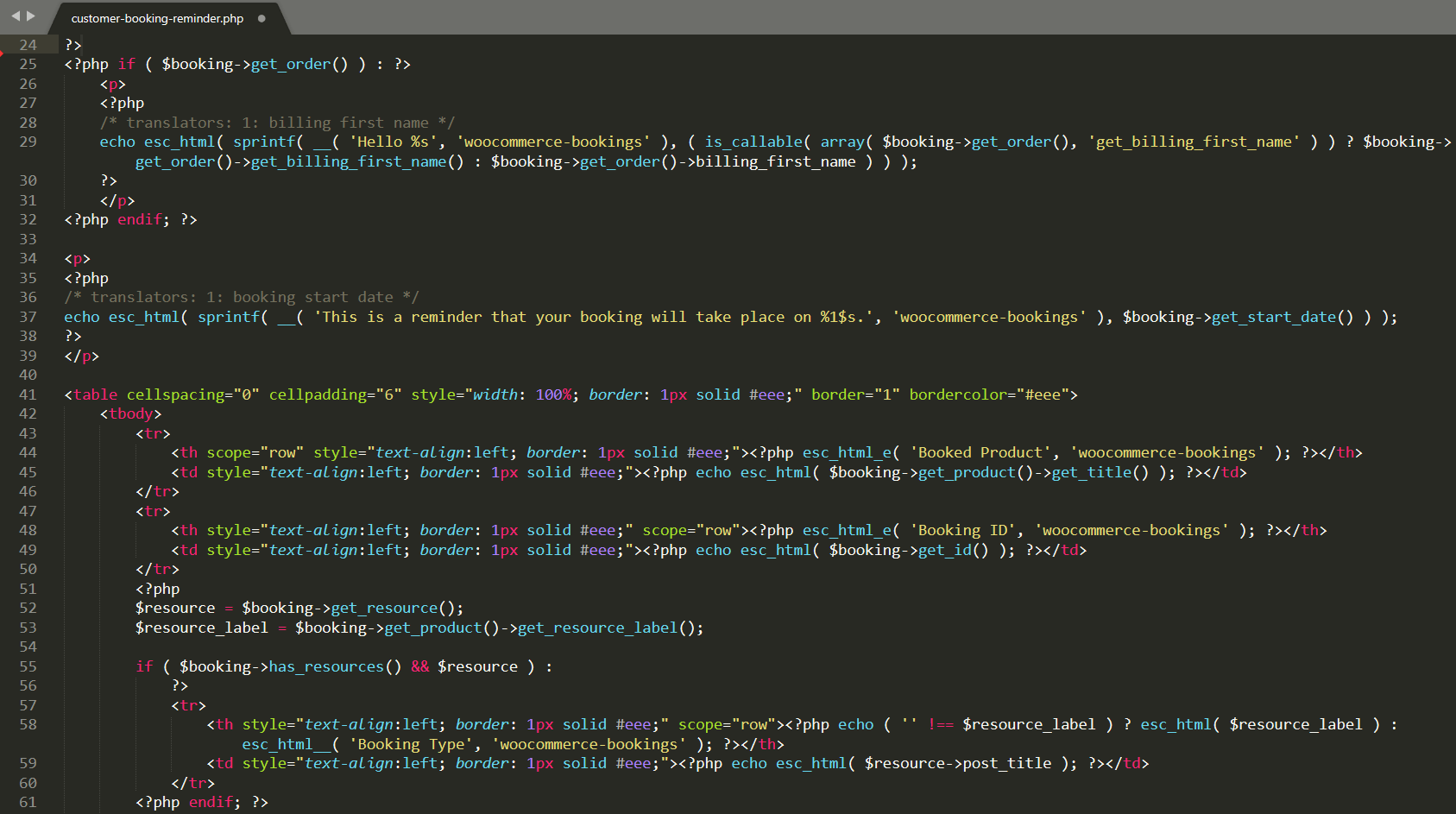
Their content can be overwritten by copying the PHP template into a child theme, which is a different job from automating anything.
How to customize WooCommerce automated emails
If you would rather your emails did not look like those of every other WooCommerce store, the settings screen is the first stop and a short one.
Find them under WooCommerce → Settings → Emails, with the shared options at the bottom of the page and the per-email ones behind each name.

What you get there is a subject, a heading, one additional paragraph, a header image and a few colours. Useful, and nowhere near what most people mean by customisation. See the beginner’s guide to WooCommerce marketing automation for the wider context.
The alternative is a plugin with an editor, such as ShopMagic, which also adds the triggers WooCommerce does not have.
ShopMagic for WooCommerce Email Automation
Create and customize WooCommerce marketing automation. It also allows you to send WordPress automated emails!
Download for free or Go to WordPress.org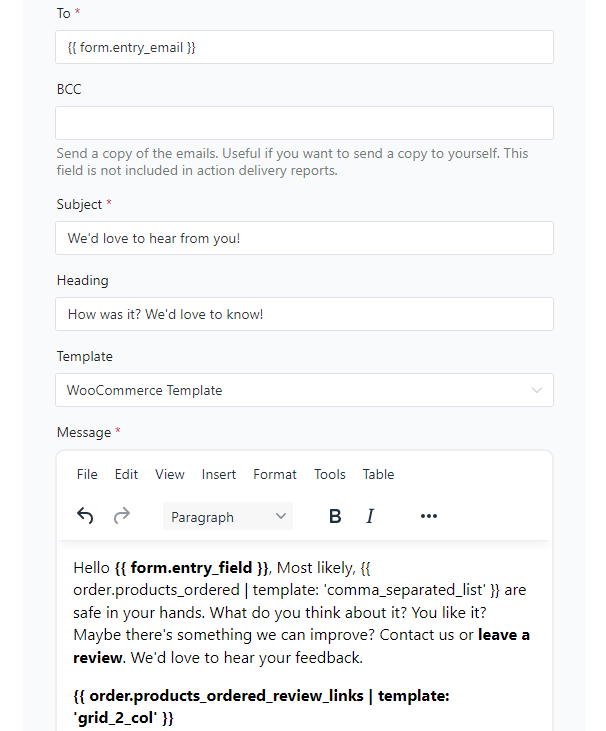
How do I set up WooCommerce email automation?
The basics are already running in your store, so this is about adding what is missing rather than starting from nothing.
Building an automation in five steps
Every automation is the same three decisions, plus two optional ones: what starts it, who qualifies, what happens, and whether it waits.
-
Install the free plugin
Install and activate ShopMagic.
WP DeskShopMagic for WooCommerce Email Automation
Create and customize WooCommerce marketing automation. It also allows you to send WordPress automated emails!
Download for free or Go to WordPress.orgLast Updated: October 19, 2026 -
Choose the event
Pick what starts the automation. Events cover orders, posts and users, so the trigger does not have to be a purchase at all.
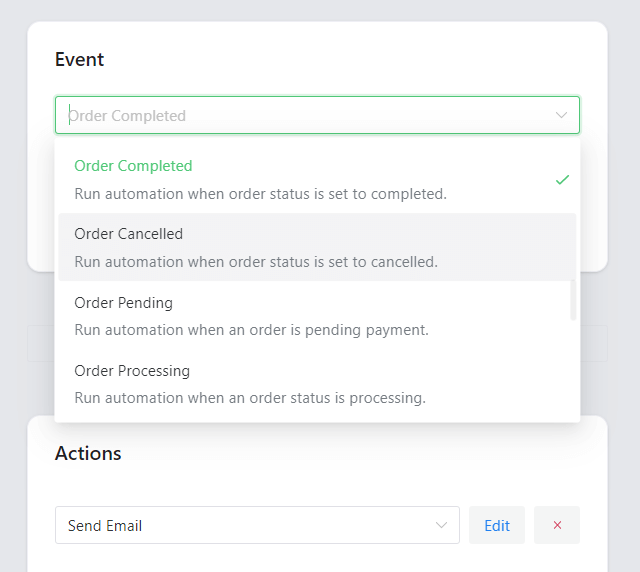
Choosing the event The familiar ones mirror WooCommerce, such as Order completed. The useful ones do not exist in WooCommerce at all: Order paid is the clearest example, because WooCommerce has no “paid” status and approximates it with Processing, which also covers orders that reached that state some other way.
-
Choose the action
Decide what happens when the event fires. An email using the WooCommerce template is one option among several.
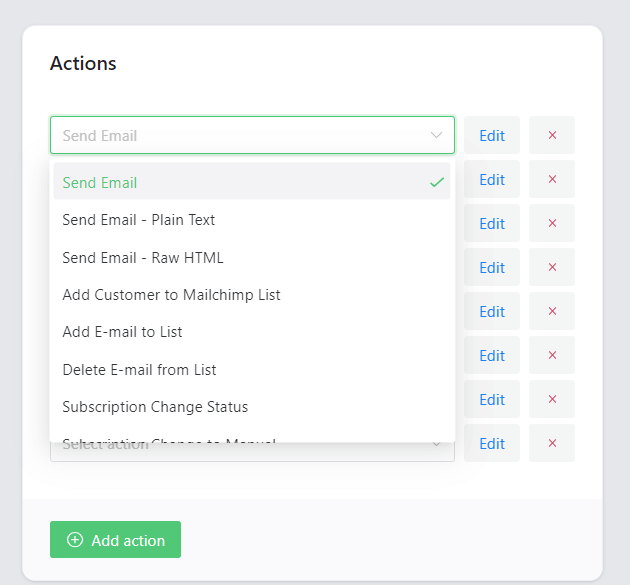
Choosing the action 💡 Other actions available:- Send an SMS with Twilio
- Send plain text or your own HTML template
- Send order data to Google Sheets
- Thank readers for comments on your blog posts using the Comment event (full events list)
- Take an address from Contact Form 7 and start an automation from it
-
Add a delay (optional)
Decide whether the action waits. A time-based delay, or a specific date, is what turns a notification into a follow-up sequence.
This is the single capability that separates automation from notification. A review request sent at the moment of purchase is useless; the same message three days after delivery is the entire point.

Adding a delay 💡 Delays need the Delayed Actions add-on, which is part of ShopMagic PRO. -
Segment with filters (optional)
Decide who qualifies. Filters let one event produce different emails for different customers, by product, category, payment method or order value.
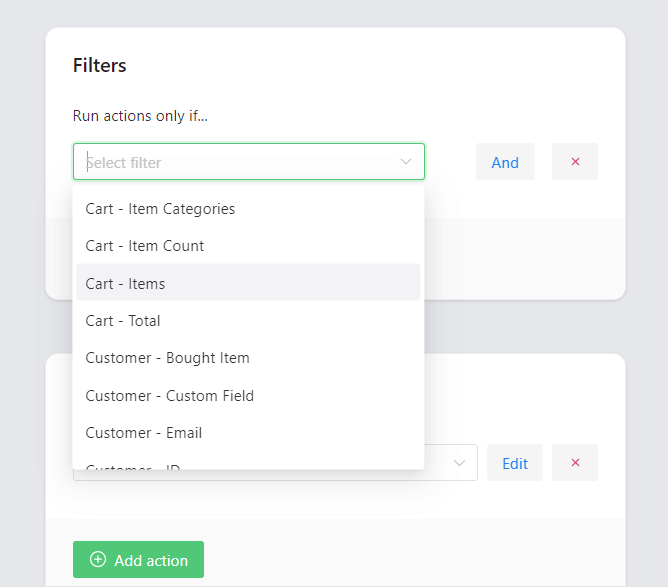
Adding filters A caveat on segmenting by customer history. WP Desk telemetry from 19,803 WooCommerce stores, collected in August 2026, shows 86.2% of orders placed as guests. Guests leave no account behind, so for most stores the reliable filters are the ones based on the order itself, what was bought and how much it cost, rather than on who the buyer has been before.
💡 Conditional logic comes from the Advanced Filters add-on.
See all ShopMagic add-ons.
Which automations to set up first
Most stores build one automation, lose interest and never return. Three are worth having before anything else, in this order.
1. A confirmation that does not depend on payment. WooCommerce confirms orders through the Processing email, which only fires once payment clears. An automation on New Order covers the customer whose payment failed and who currently hears nothing at all.
2. Abandoned cart recovery. The largest recoverable sum in most stores, and impossible in WooCommerce because there is no abandoned cart event. One email an hour after the cart is left recovers more than people expect.
3. A review request on a delay. Reviews work on buyers you will never speak to, and this is the clearest case for the delay feature: the request has to arrive after the product has been used, not after it was paid for.
After those, the usual next two are instructions timed for a few days after delivery, and a win-back for customers who have not ordered in several months. Both need a delay, which is why they come after you have decided whether the sequence is worth paying for.
Summary
WooCommerce automates eleven emails and every one of them hangs off an order status or an account event. Within that boundary it works without any help: orders get confirmed, passwords get reset, admins get notified. Outside it, there is nothing. No trigger that is not a status change, no delay, no way to vary a message by customer or by what was bought, no email you wrote yourself beyond a subject, a heading and one paragraph, and no action other than sending mail.
Building what is missing is the same five decisions each time: what starts it, what happens, and optionally who qualifies and whether it waits. The two optional ones are where the value sits, because a delay turns a notification into a follow-up and a filter turns one message into several. Worth knowing that filters based on customer history are weaker than they look when most of your buyers check out as guests; filters on the order itself are the dependable ones.
If you are starting from nothing, build three: a confirmation that fires when the order is placed rather than when payment clears, an abandoned cart email an hour after the cart is left, and a review request delayed until the product has actually arrived. Those three cover the gaps WooCommerce leaves and are enough to tell you whether the rest is worth your time.
ShopMagic for WooCommerce Email Automation
Create and customize WooCommerce marketing automation. It also allows you to send WordPress automated emails!
Download for free or Go to WordPress.orgFrequently asked questions
Does WooCommerce have email automation?
It has eleven automated emails tied to order statuses and account events. It has no way to create new ones, delay them, or target them at particular customers.
Can WooCommerce send abandoned cart emails?
No. There is no abandoned cart event in WooCommerce, so there is nothing for an email to attach to. This is the most common reason stores add a plugin.
Can I delay a WooCommerce email?
Not in WooCommerce itself. Every built-in email fires at the moment its status changes. Delays come from a plugin.
How do I create a new automated email?
Choose an event to start it, an action for what happens, and optionally a filter for who qualifies and a delay for when. That structure is the whole of it.
What is the difference between an event and a filter?
The event decides when the automation runs. The filter decides whether this particular customer qualifies once it has run.
Which automation should I build first?
A confirmation on the New Order event, because it reaches the customers whose payment failed and who otherwise receive nothing.
Can an automation do something other than send an email?
Yes. An SMS, a row added to Google Sheets, a Slack message and other actions can hang off the same event, singly or together.
Why is segmenting by customer history unreliable?
Because most WooCommerce orders are placed by guests, who leave no account and no purchase history. Filters based on the order itself are more dependable.
