



A newsletter signup form that only adds a row to a list is a collection exercise, not a marketing one. The form fires at the moment somebody decided they were interested, and in most stores nothing happens for three weeks until the next campaign goes out.
What should happen when somebody signs up
Something, immediately, and then one more thing a few days later. The gap between a signup and the first message is where most of the intent is lost.
The immediate email does two jobs. It confirms the address works, which keeps the list clean, and it sets expectations about what will arrive and how often. Both are unglamorous and both reduce the unsubscribe rate on everything that follows, because the commonest reason people leave a list is that it turned out to be something other than what they signed up for.
The second message, a few days later, is where the signup earns something. For a store that usually means the most useful thing you publish rather than the most promotional, because the person has given you an address and not yet given you an order. A first-purchase incentive belongs here too if you use one, and it belongs here rather than in the first email, where it reads as a transaction rather than a welcome.
Why the form matters less than what it triggers
Form plugins are good at collecting and poor at reacting. A submission usually produces a stored entry and a notification to the site owner, which is the right behaviour for a contact form and the wrong behaviour for a signup.
What turns one into the other is treating the submission as an event rather than a record. The same way an order status change can start a sequence, a form entry can, and the fields the person filled in travel with it. A signup that captured a name, a product interest or a country can be answered with something that reflects all three rather than with a generic welcome.
That also removes the usual middle step. Plenty of stores export form entries to a separate email tool, which adds a delay measured in days and a copy of the data that goes stale immediately.
Keeping the list worth having
Ask for less. Every field past the email address costs signups, and most of what stores collect at this stage is never used in a single message afterwards.
Record the consent properly, including when it was given and what the person was told they were agreeing to. This is a legal requirement in a good part of the world and it is also the only thing that will answer a complaint two years later.
And connect the list to the orders. A subscriber who becomes a customer should stop receiving the first-purchase incentive, and a customer who signs up should not be welcomed as a stranger. Our guide to building a WordPress email list goes into how the opt-in sits alongside the store.
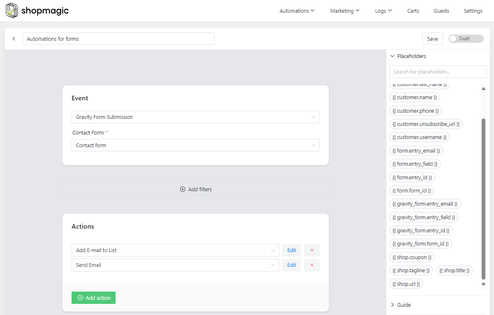
Treating a submission as an event is what removes the export step and the stale copy of the list. ShopMagic for Gravity Forms starts an automation when a form is sent and carries its fields into the message, so the welcome can use what the person actually filled in.
Summary
A signup should be answered immediately and then once more a few days later. The first email confirms the address works and sets expectations about frequency and content, which is unglamorous and reduces later unsubscribes, since people mostly leave a list because it turned out to be something other than what they joined. The second delivers the most useful thing you publish rather than the most promotional, and it is where a first-purchase incentive belongs, because in the welcome email the same offer reads as a transaction.
The form itself matters less than what it starts. Form plugins store an entry and notify the owner, which suits a contact form and not a signup, and the fix is to treat the submission as an event carrying its fields rather than as a record. A signup that captured a name, an interest and a country can be answered with all three. It also removes the export step, which adds days and creates a copy of the data that is stale on arrival. Beyond that: ask for fewer fields, since each one costs signups and most are never used; record the consent with its date and wording, because that is what answers a complaint two years later; and connect the list to the orders, so a subscriber who buys stops getting the incentive and a customer who signs up is not welcomed as a stranger.
Frequently asked questions
These three come up when a store starts collecting addresses deliberately.
Should the signup use double opt-in?
In most of Europe it is the safer default, and it improves deliverability as a side effect by keeping mistyped addresses off the list.
Can a checkout checkbox feed the same sequence?
Yes, and it should, though the first email needs different wording. A customer already knows what you sell.
How many welcome emails are too many?
Past three before the first purchase, the unsubscribe rate usually answers the question. Two is enough for most stores.
